Choosing Ceiling Fans Without Compromising Your Design
How to choose a ceiling fan that feels intentional, proportionate, and beautifully integrated into the room.
I was recently quoted in House Beautiful for their piece, "How to choose a ceiling fan that feels intentional, proportionate, and beautifully integrated into the room," about ceiling fan size (read the full article here), and I have more tips to think about below. Enjoy!
Ceiling fans are practical, but they can be visually demanding. They sit in the center of the ceiling, often at the most prominent point in the room, so even a small mismatch in scale, finish, or style can affect the entire space. The goal is not necessarily to make the fan disappear. It is to choose one that feels considered and connected to the architecture.
A well-selected ceiling fan can add comfort without competing with the rest of the design. The key is to approach it as you would any other major fixture: understand the room, establish the correct scale, and choose materials that support the overall palette.

Begin with function
Before looking at finishes, think about what the fan needs to do. Is it providing daily airflow in a bedroom, helping circulate air in a vaulted living room, or making a covered porch more comfortable? The answer will influence the size, mounting height, control options, and whether the fixture needs an integrated light. A fan that works beautifully in a small bedroom may feel ineffective and underscaled in a large family room.

Get the scale right
Scale is the most important visual decision. A fan that is too small can look tentative, while one that is too large may dominate the ceiling and make the room feel lower. Consider the width and length of the room, the ceiling height, and the placement of surrounding features such as beams, recessed lights, and cabinetry. In an open-plan space, size the fan for the area it serves rather than the full footprint of the combined rooms.
Respect the ceiling height
The relationship between the fan and the ceiling matters as much as the blade span. A flush or low-profile mount is often the right choice for a lower ceiling. Taller or vaulted ceilings typically need a downrod so the blades sit at an effective and visually comfortable height. On a sloped ceiling, confirm that the canopy and mounting system are designed for the pitch. The installation should feel intentional, not like the fan is either pressed tightly to the ceiling or floating too far below it.
Choose a restrained silhouette
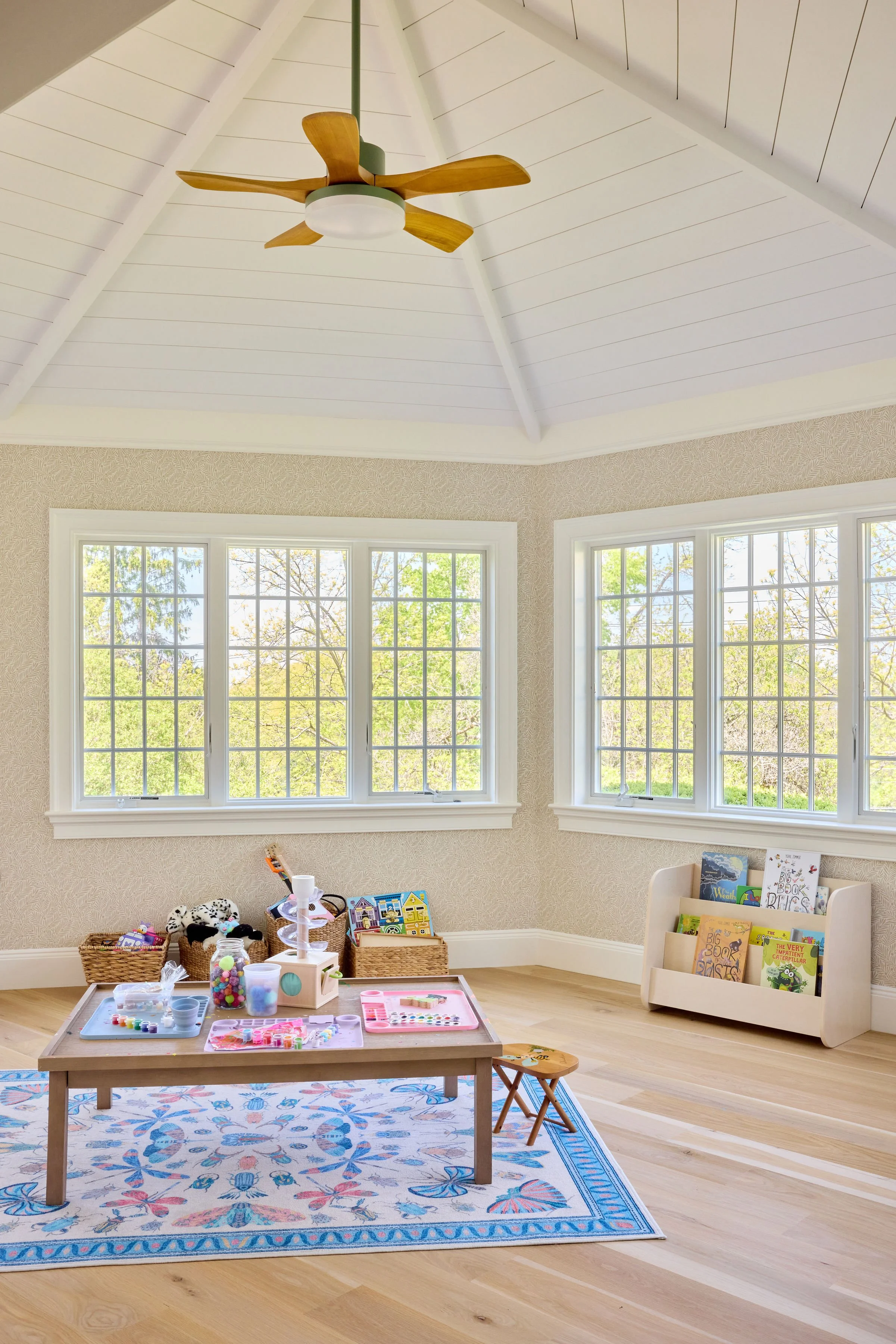
The most versatile ceiling fans usually have a clean, restrained profile. Simple blades, a compact motor housing, and minimal ornament allow the fixture to work within both traditional and modern interiors. This does not mean every fan should be ultra-contemporary. In a more classic room, look for softened edges, warm materials, and a familiar shape without fussy detailing.
Coordinate the finish
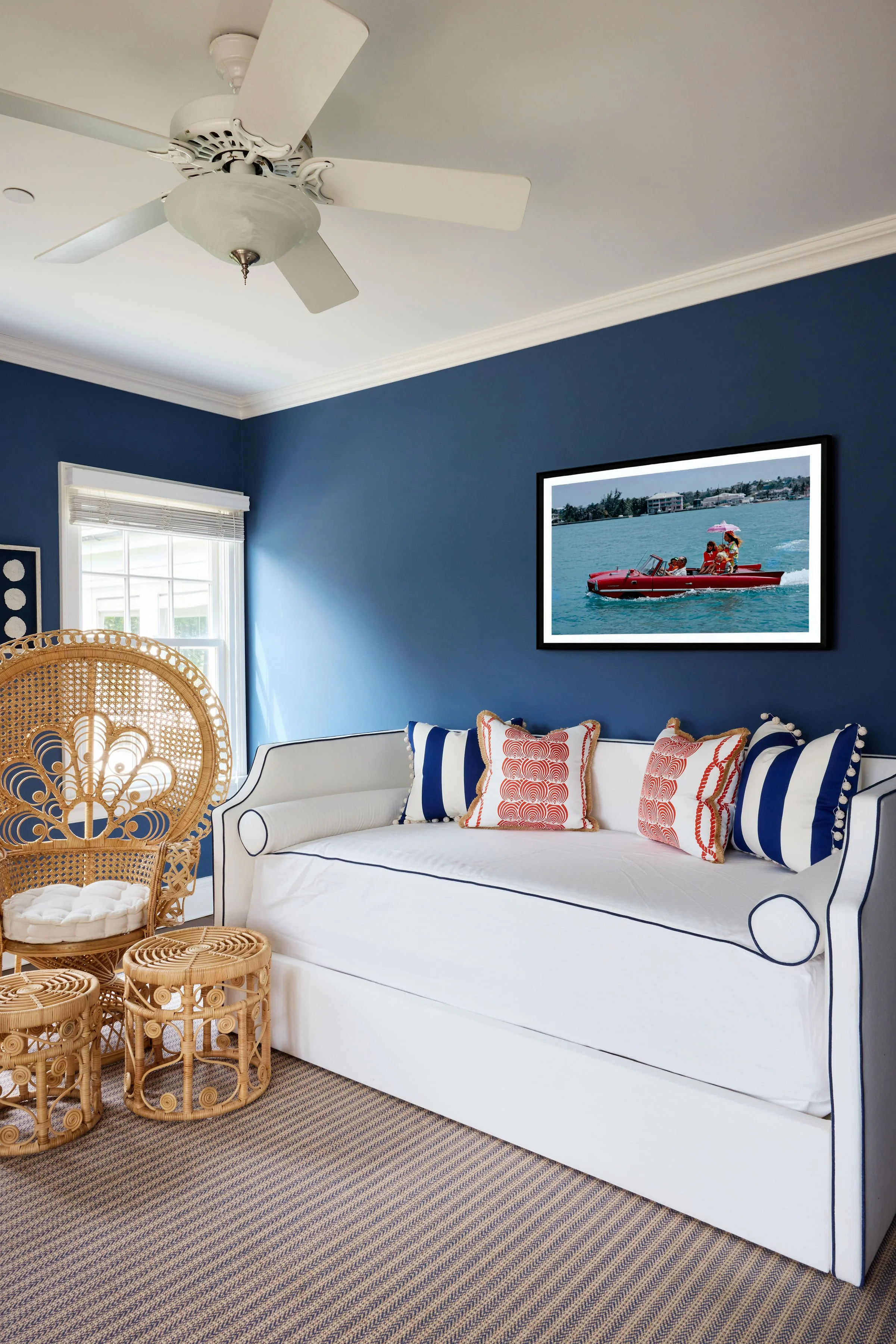
Treat the fan finish as part of the room's larger material story. A dark bronze fan can relate to iron hardware or dark window frames. A warm brass detail can connect to lighting and cabinet hardware. Natural wood blades can soften a white ceiling and bring warmth to a room with oak, walnut, or woven elements. White fans can be effective when you want the fixture to recede, but the undertone should work with the ceiling paint rather than appearing stark or bluish.
Think carefully about contrast
High contrast draws attention upward. Sometimes that is the intention, especially in a dramatic vaulted room or against a wood ceiling. In more subdued spaces, a fan that relates closely to the ceiling color creates a calmer result. If the room already has several strong focal points, let the fan play a supporting role. If the architecture is simple, a warmer wood or sculptural blade shape may add just enough interest.
Decide whether you need a light
Integrated lights are convenient, but they are not always the most attractive or flattering source of illumination. If the room already has recessed lights, lamps, or decorative fixtures, a fan without a light can look cleaner. When a light is necessary, choose a design with a discreet, diffused lens and dimming capability. Avoid exposed bulbs or overly bright cool light, which can make the fan feel more utilitarian.
Pay attention to blade shape
Blade shape changes the personality of a fan. Broad, gently curved blades can feel relaxed and organic. Narrow blades tend to read more contemporary. Traditional paddle shapes work well when the material and motor housing are simple. Look at the fan from below, since that is how it will actually be experienced. Product photos taken only from the side can hide a bulky housing or an awkward blade connection.
Prioritize quiet performance
A beautiful fan quickly becomes frustrating if it hums, rattles, or wobbles. Review the motor quality, available speed settings, and control method before purchasing. A remote may be useful in a bedroom or tall space, while a wall control can feel more permanent and intuitive in frequently used rooms. Plan the controls early so the electrician can coordinate the wiring with the rest of the lighting design.
Use the correct fan outdoors
For a porch, screened room, or other exterior setting, choose a fan with the appropriate damp or wet-location rating for the conditions. Outdoor finishes and blades should be made to withstand moisture and temperature changes. The visual principles remain the same: relate the fan to the architecture, keep the scale generous, and avoid adding unnecessary decorative detail.
A simple selection formula
Start with the functional requirements. Confirm the appropriate blade span and mounting type. Choose a restrained silhouette, then coordinate the finish with one or two existing materials in the room. Add an integrated light only when the space truly needs it. Finally, review the fan from below before making the decision.
The best ceiling fan is not an afterthought. It is a hardworking piece of the room that supports the design without asking for all of the attention.
Designer’s note:
When possible, tape out the proposed blade span on the floor directly beneath the installation point. It is a simple way to understand the fixture's scale in the room before ordering.
Read the full House Beautiful feature here
Kelsey Peterson is the principal designer of Style and Space Interiors, an interior design studio based in New York.