
My Interior Design Process: From Understanding to Execution
Every project I take on begins the same way: with listening.
The first step is always meeting with the client to understand their needs, priorities, and how they live. I want to know what’s working, what isn’t, and what matters most to them. This early conversation sets the tone for everything that follows.
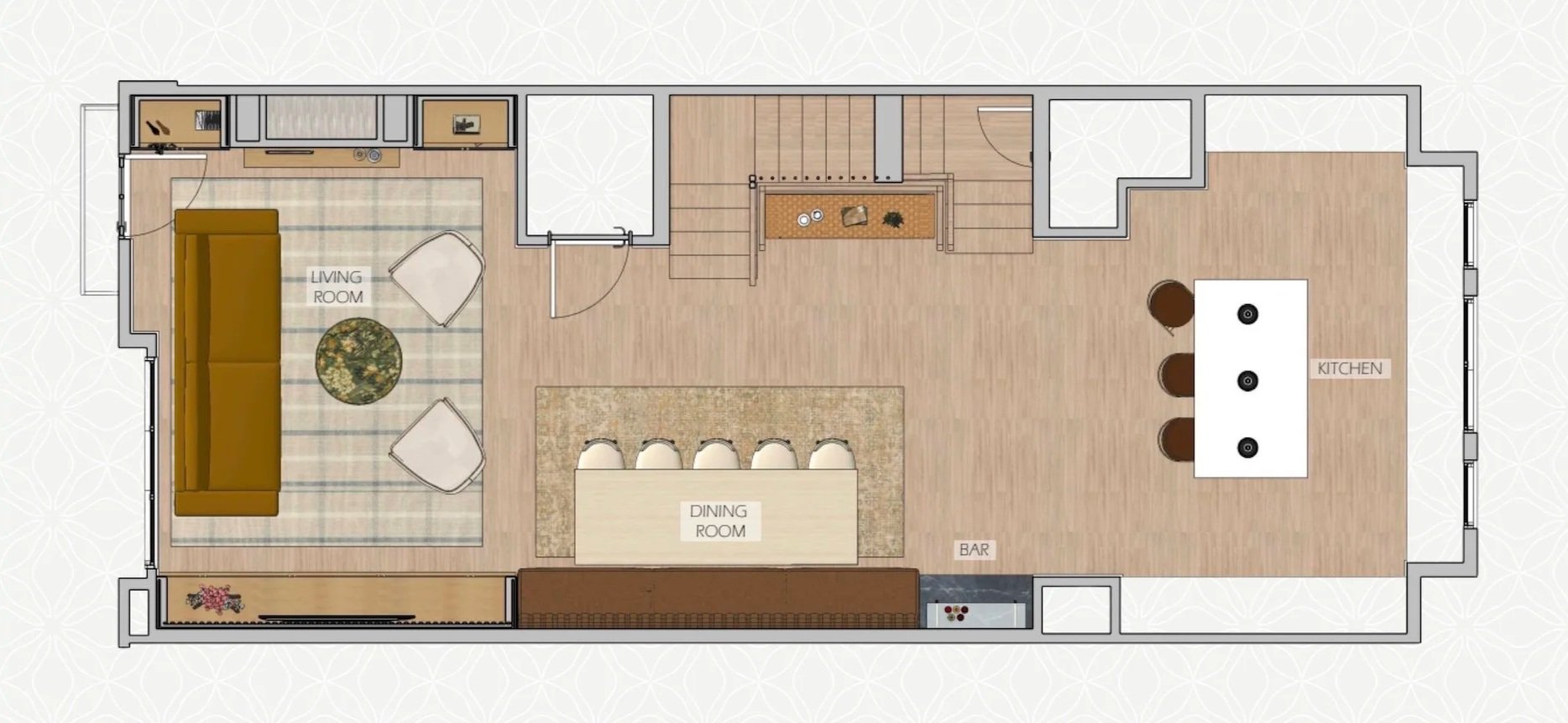
From there, I dive into the floor plan. I study how the space actually functions—natural light, access points, ceiling heights, volumes, and the relationships between rooms. I’m looking at how people move through the space, where they pause, where energy gathers, and where it needs to soften. Good design starts with understanding the architecture you’re working with, not fighting it.
At the same time, I review any inspiration images the client shares. But I’m listening just as closely to the language they use. I love when clients tell me how they want to feel in their home—comfortable, calm, inspired, proud, relaxed, or ready to entertain. Words like “modern” or “traditional” can mean something different to everyone, but feelings are universal. Those emotional cues guide my decisions far more than labels ever could.
Once I’ve solved the puzzle of the furniture layout, everything else begins to fall into place. This step is critical. A room can be beautiful, but if it doesn’t function well, it will never feel right. When the layout works—when the scale, circulation, and proportions are resolved—I move into defining the look and feel of the space.
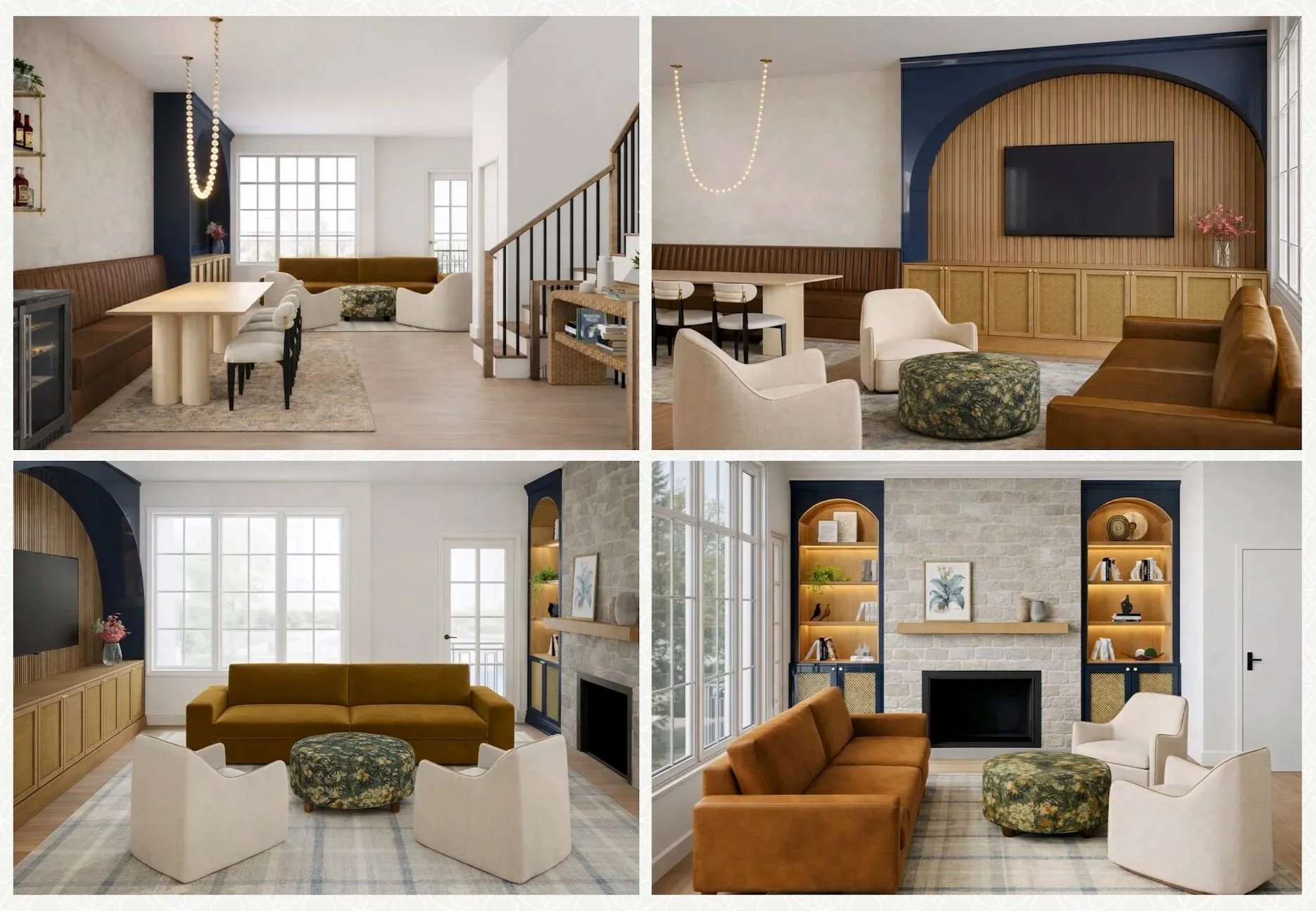
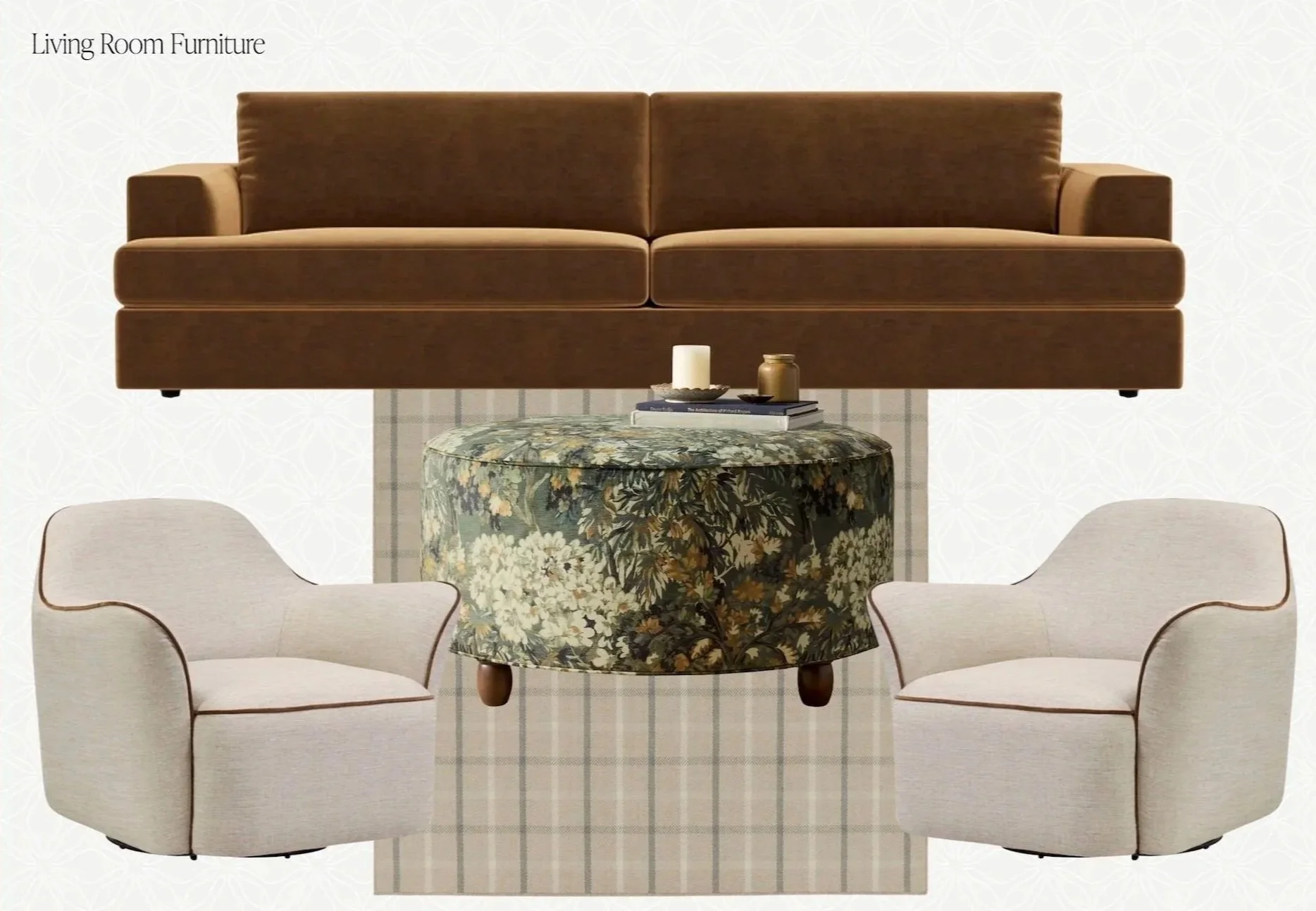
This is where I ask more key design questions:
What’s the vibe I’m creating?
How should the walls feel? The ceiling?
What role does lighting play—ambient, task, accent?
What textures belong here?
How do I bring in natural materials?
How am I balancing color so the space feels layered, not overwhelming?
Every surface, material, and finish is considered in relation to the whole.
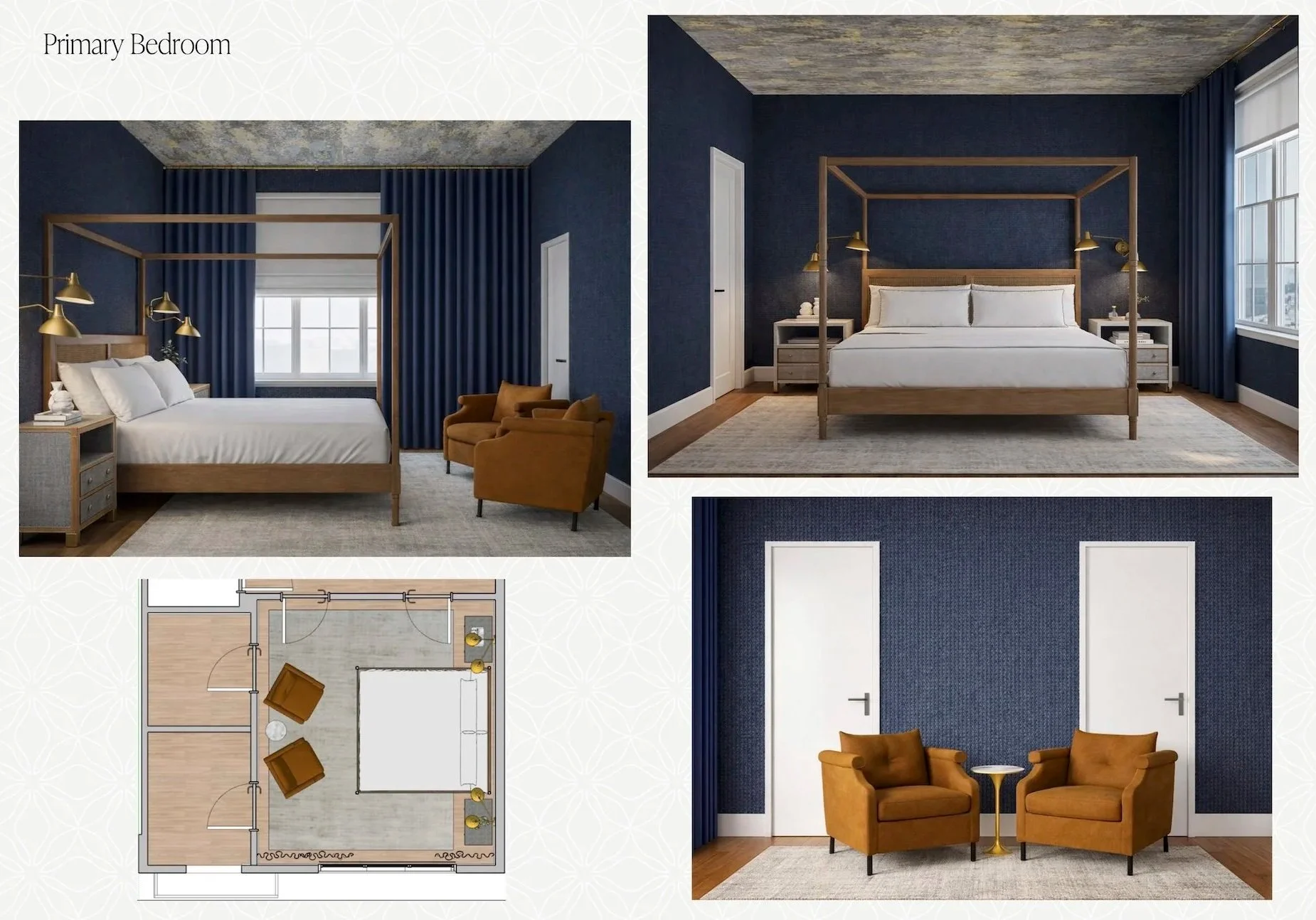
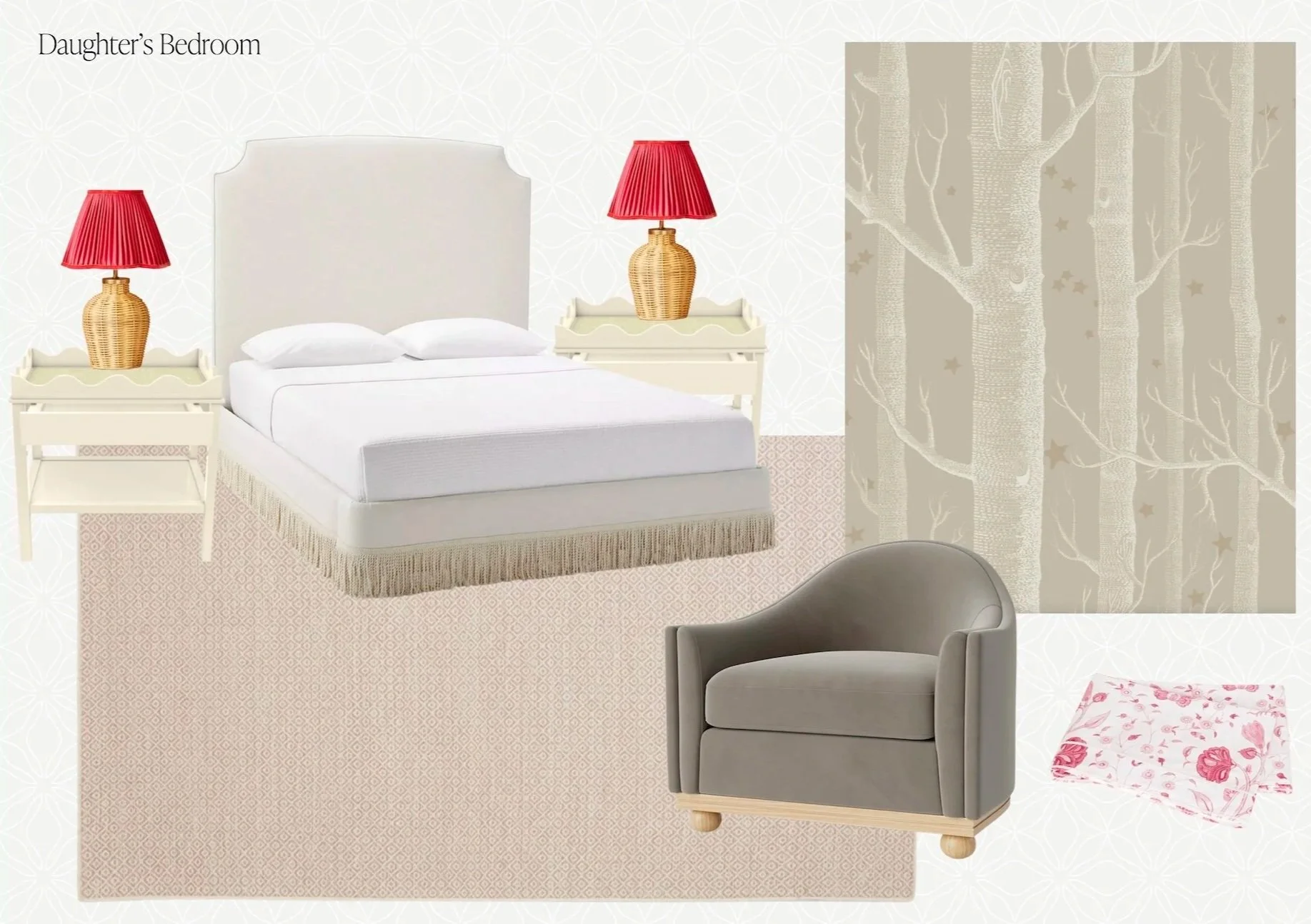
Once I’ve curated my recommendations, Fernanda and I bring the vision to life through realistic renderings. These allow clients to truly see how the space connects, how it flows, and how it achieves their goals. Renderings also serve a very practical purpose: they allow us to move forward with accurate pricing.
Budget is always on my mind throughout the design process. Every choice adds up, and understanding the full picture helps inform smarter decisions. By presenting a holistic view—design, scope, and cost—clients can clearly see what their investment looks like and decide what makes the most sense for them.
